.jpeg)
Modernising a high-risk electrical infrastructure | Industrial Manufacturing
.jpeg)
A multi-phase programme to eliminate arc flash hazards, remove obsolete switchgear, and future-proof the high and low voltage network at one of the UK's largest paper manufacturing facilities - all while maintaining continuous production.
The Challenge
Paper manufacturing is an energy-intensive, always-on process. The electrical infrastructure at this site had grown organically over decades - a patchwork of ageing switchgear, oil-filled circuit breakers, and legacy low-voltage boards that had long outlived their design life.
The consequences were serious. Several boards carried arc flash hazard ratings that exceeded safe working limits - in one case, PPE categories were exceeded entirely, meaning the only safe approach was to operate with the equipment fully de-energised. Other boards suffered from corrosion, missing incomers, and structural obsolescence. The risk was not theoretical; it was present every time an engineer opened a panel door.
The scale of the problem demanded a structured, long-term programme - not a single shutdown, but a carefully sequenced series of projects, each one building on the last, designed to transform the site's electrical infrastructure while keeping the mills running.
Core Services Delivered
The programme spanned multiple project phases, progressively reducing risk across the site's 11kV and 415V networks. Earlier phases established the foundation; the most recent phase - Electrical Infrastructure Phase 4 - addressed the remaining high-priority safety and obsolescence items.
- Replacement of the east side low-voltage services boards, including new cast-resin transformers
- Replacement of an ageing 11kV Johnson & Phillips board with a new ABB UNIGEAR ZS1 switchboard
- New ABB 11kV board installed in the vacuum pumphouse substation alongside a major drive system installation
- New transformer installations, including a dedicated transformer for the de-ink plant housed in a GRP weatherproof building
- Migration of a transformer with upgraded protection to resolve corrosion and continuity risks
- Humidity control installed in a key substation to prevent moisture ingress
Phase 4 in Detail
Phase 4 tackled the remaining critical items: a west side services switchboard carrying unacceptable arc flash risk, a vital supplies board in the same condition, and enabling works to decommission redundant infrastructure that was consuming space and creating maintenance liability.
1. Install new services board A
A new switchboard was installed and used to provide a temporary parallel feed to the existing board, allowing all connected supplies to remain live throughout the transition. Cabling for ancillary systems was re-routed at this stage.
2. Install new services board B and migrate supplies
A second new switchboard was connected via new services board A, creating a fully redundant new infrastructure alongside the old. Supplies were progressively migrated from the legacy board as and when production windows allowed.
3. Remove legacy board and enabling works
Once all circuits had been migrated, the old switchboard was decommissioned and removed entirely. Enabling work to free space included migrating a 3.3kV compressor supply to an existing auxiliaries board and removing the now-redundant 3.3kV switchboard and its associated transformer.
The vital supplies switchboard - serving safety-critical loads - was replaced using the same staged migration methodology, ensuring no interruption to protected circuits at any point.
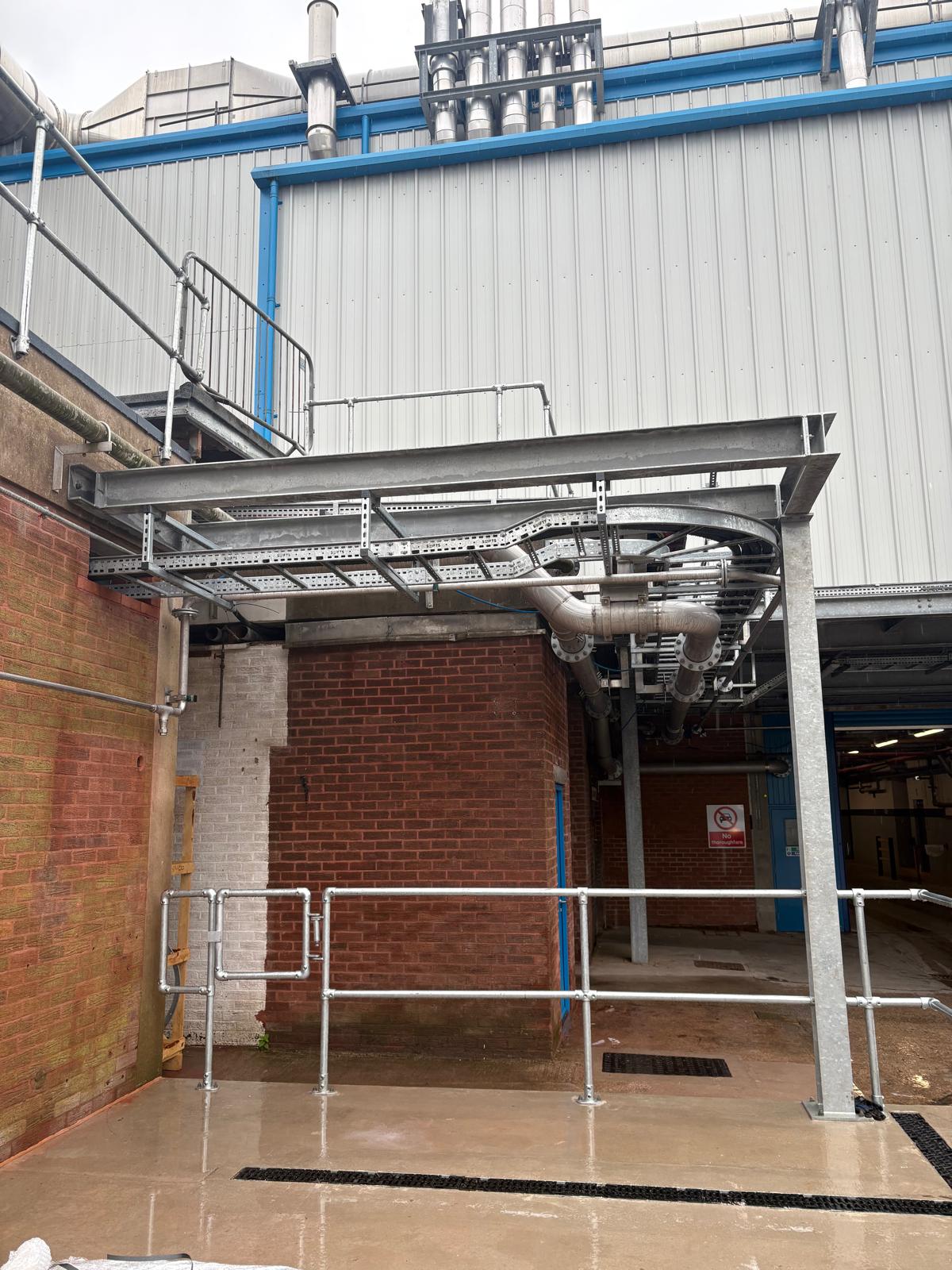
Infrastructure improvement works ran in parallel: transformer bays received new security fencing and corrosion treatment, transformers were repainted and reconditioned, and signage across the substation complex was updated to current standards.
The Outcomes
Arc flash risk eliminated
Multiple boards previously rated at Category 4 or beyond-PPE-rating are now replaced with modern, type-tested switchgear meeting current arc flash standards.
Continuity maintained throughout
All switchovers were executed with live parallel feeds in place. The three-phase migration methodology meant production loads were never at risk during any transition.
Simplified and rationalised network
Redundant switchboards and transformers have been removed, reducing the maintenance footprint and creating space for future infrastructure investment.
Programme foundation for future phases
The work positions the site for the next phase of infrastructure investment, including the remaining 11kV GEC OCB board and further arc flash rectification across the low-voltage network.
"The methodology on this project was designed around one constraint above all others: the mills could not stop. Every switching sequence, every cable route, every temporary arrangement was planned with that in mind." Anthony Marsh, Project Manager
Looking ahead
The programme is ongoing. Identified for future phases is the replacement or modification of the remaining 11kV oil circuit breaker board - the last of its type on site - along with further arc flash study and rectification work on distribution boards serving ancillary systems. Each phase of the programme reduces the site's residual risk profile and moves it closer to a fully modern, compliant infrastructure.
The gallery
.jpeg)
.jpeg)
.jpeg)
.jpeg)

Reliable Partners For Critical Infrastructure.
Get in touch to discuss your project, challenges, or requirements. Our specialists are ready to support you end-to-end.